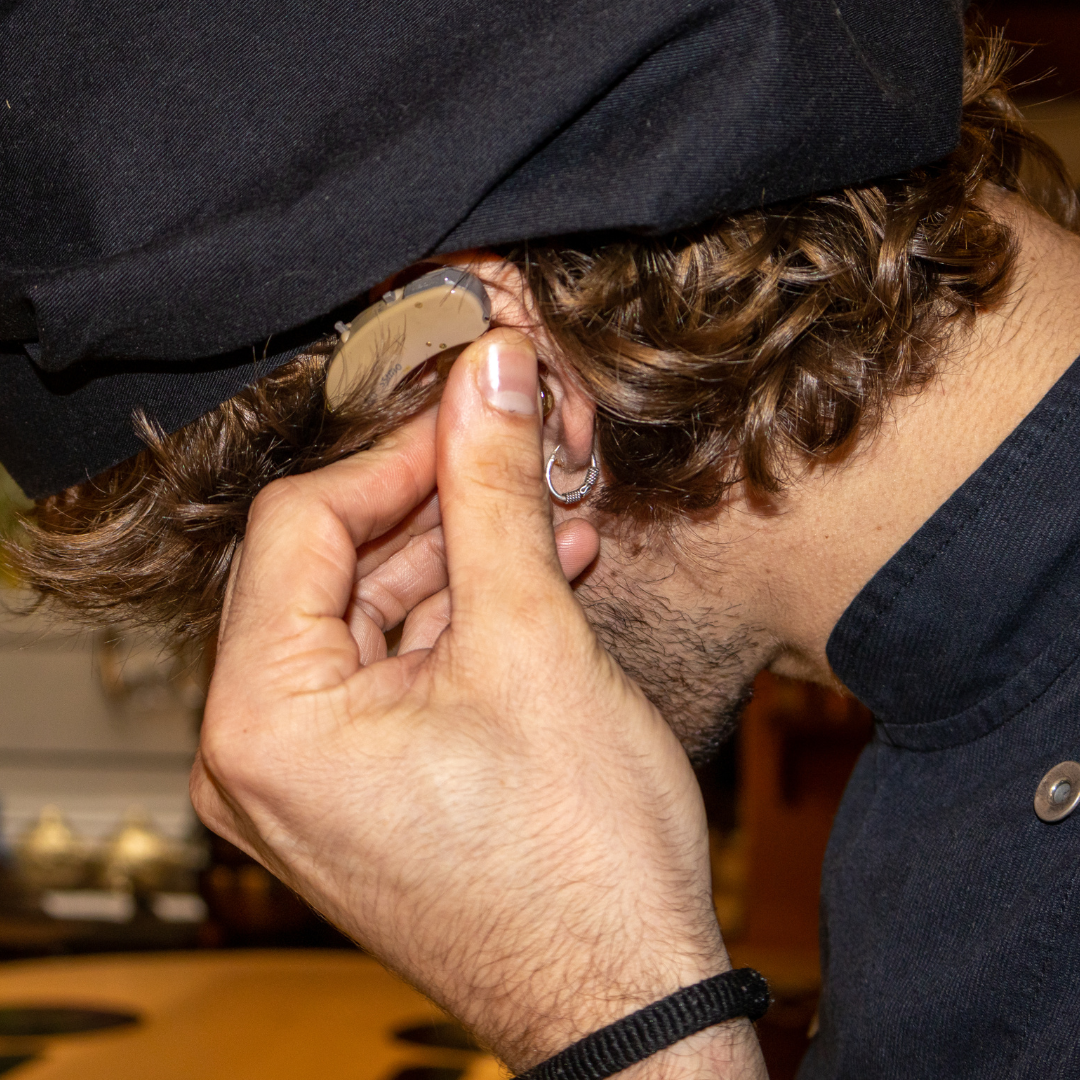
Active restaurant conversations are frequently hard to decipher when surrounding background noise clashes with your hearing. Our practice provides targeted diagnostics to evaluate hearing in quiet atmospheres as well as complex noise environments. After uncovering the precise factors driving your difficult hearing, our team helps you select individualized auditory solutions.
Why Everyday Hearing Fails in Busy, Noisy Restaurants
A tranquil environment produces a beneficial signal-to-noise ratio where spoken dialogue easily overpowers weak ambient noise. Commercial restaurant spaces present the polar opposite acoustic dynamic. Cross-talk, ambient music, dishware noise, and harsh acoustic reverberation interfere with speech clarity, forcing your brain to labor to extract the target voice.
This symptom pattern often reflects underlying high-frequency hearing loss, central processing dysfunction, or physiological aging of the auditory nerve. Cognitive exhaustion, physical fatigue, low ambient lighting, and increased distance from your conversational partner further compound the challenge. Some people have normal results on a basic hearing test but still perform poorly on speech-in-noise testing. Consistent difficulty following restaurant conversation warrants clinical investigation even when everyday hearing seems largely unaffected.
Diagnosing High-Frequency Hearing Loss and Clarity Issues
We begin with a history of the situations that cause trouble, along with questions about noise exposure, tinnitus, medications, family history, and changes in either ear.
Standard pure-tone audiometry gauges the lowest volume thresholds detectable across varying acoustic frequencies via specialized earphones and bone oscillators. In high-frequency hearing loss, the audiogram reveals a sloping configuration where hearing acuity drops progressively as pitch frequencies increase. Further clinical diagnostics feature tympanometry to evaluate eardrum and middle-ear mechanics as well as word-recognition testing for speech comprehension.
Standard quiet test booths fail to simulate real-world restaurant noise, making speech-in-noise testing a crucial clinical tool. It measures how well you recognize words or sentences as competing sounds become louder. In combination, these diagnostic metrics reveal whether communication hurdles involve audibility thresholds, speech discrimination, neural noise management, or mixed conditions.
Understanding Auditory Processing Disorders in Noisy Environments
An auditory processing disorder degrades the central nervous system’s capacity to organize and interpret complex sound inputs. While peripheral ears may register soft tones normally, the auditory cortex struggles to filter competing noise, resolve phonetic contrasts, or keep pace with rapid conversation. Our clinical team starts by examining peripheral auditory thresholds, subsequently deciding if an auditory-processing test battery or multidisciplinary consultation is necessary.
Behavioral Strategies for Hearing Clearly in Loud Venues
Minor environmental adjustments can boost speech acoustic signals and supply critical visual lip-reading cues. Before dining out, choose a quieter restaurant or visit during an off-peak time. Dining locations utilizing sound-absorbing elements like booths, felt panels, window curtains, and carpet offer better acoustics than high-ceilinged rooms with hard surfaces.
At the restaurant:
- Request a table away from the kitchen, bar, speakers, and large groups.
- Sit with a perimeter wall directly behind you to cut down on ambient noise approaching from the rear.
- Position yourself to directly face companions under bright lighting to enhance facial comprehension.
- Reduce physical spacing between yourself and companions to maximize direct speech perception.
- Place your better-hearing ear toward the person you most want to hear.
- Ask the speaker to rephrase the missed portion instead of repeating everything.
- Verifiably confirm essential conversational facts instead of bluffing comprehension.
- Step into a quiet area for a few minutes when listening fatigue begins to compromise focus.
- Encourage friends to enunciate clearly while maintaining an even, normal conversational tempo.
- Elevated yelling distorts auditory signals and seldom improves actual phonetic comprehension.
Modern Audiological Tools for Managing Background Noise
Determining the proper hearing technology hinges on the underlying disorder, everyday listening environments, and whether peripheral hearing loss is diagnosed. Professionally fitted hearing aids may use directional microphones, digital noise reduction, and dedicated restaurant programs to emphasize speech from the front and reduce some competing sound. Users should establish realistic expectations because no hearing device can fully eradicate all unwanted ambient speech.
Utilizing an external remote microphone can deliver a dramatically superior signal-to-noise ratio. Worn on the speaker’s collar or set on the table, the microphone broadcasts direct audio to paired hearing aids or specialized receivers. This targeted setup effectively neutralizes the negative impacts of room distance and interfering background noise.
Alternative assistive hearing tools include:
- Multi-directional table microphones designed for small dinner gatherings
- Built-in telecoils linking directly with induction hearing-loop systems in public venues
- Mobile phone live-transcription apps offering real-time conversational subtitles
- Consumer wireless earbuds or hearables featuring customizable assistive listening modes
- Decibel-level applications and restaurant rating guides for finding quiet tables
We can compare options, confirm compatibility, and teach you how to use the selected device.
How an Audiologist or Physician Can Improve Hearing in Noise
A professional clinical assessment moves beyond basic baseline statements like “I hear fine in quiet rooms.” We can review the places, speakers, and noise levels that cause problems and select tests that reflect those concerns. The diagnostic battery may encompass pure-tone thresholds, acoustic middle-ear evaluations, suprathreshold word recognition, and speech-in-noise measures. Specialized auditory-processing testing can be ordered when patient history and preliminary audiometric findings warrant deeper neural investigation.
Any sudden, asymmetric, or rapidly deteriorating hearing loss demands immediate medical evaluation by an ear, nose, and throat physician. Dedicated individualized care pinpoints the underlying auditory cause rather than dismissing your struggles as standard restaurant noise.
Schedule a Hearing Evaluation Today
If noisy restaurant gatherings leave you struggling to follow dialogue, pulling away, or feeling completely drained, schedule an audiological evaluation with our team. Our clinical team will determine the best strategies to improve your hearing in noisy environments through custom hearing-aid programming, remote microphones, or targeted auditory rehabilitation.
Contact our practice today to book your consultation and take a decisive step toward reconnecting in social settings.